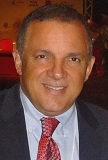
• Rosenberry, Donald
    Donald Rosenberry, Ph.D., is a research hydrologist with the U.S. Geological Survey’s National Research Program specializing in wetland hydrology, water budgets of lakes and wetlands, and hyporheic processes. His research is focused on the sediment/water interface with an emphasis on understanding processes that control exchanges between groundwater and surface water. He is also the coordinator of the Shingobee Headwaters Aquatic Ecosystem Project in which scientists from the USGS and academia work together to study physical, chemical, and biological processes of lakes, wetlands, and streams at a small-watershed scale. Rosenberry’s interests in groundwater, surface water, and the dynamic sediment/water interface stem from his formative years at Bemidji State University located on the shore of one of Minnesota’s 10,000 lakes, the University of Minnesota located on the banks of the Mississippi River, and the University of Colorado through which Boulder Creek flows.
  • Russell, Kevin
    Kevin Russell is a principal with Anchor QEA, an environmental consulting firm specializing in aquatic, shoreline, and water resource projects. He has more than 20 years of experience in the field, and has directed and managed numerous projects on behalf of both government and private sector clients in the areas of contaminated soil and groundwater investigation; contaminated sediment management; pollutant fate, transport, and bioaccumulation; surface water quality/eutrophication; and stream hydraulic analysis. Many of these projects have included the development of mathematical models to understand the fate and transport of contaminants in surface water and groundwater systems, and the application of these models to assist in the evaluation and design of remedial alternatives, including monitored natural recovery programs. Russell also has considerable experience in the evaluation and modeling of groundwater/surface water interactions, including application of transport models to guide contaminated sediment remediation programs. He’s a member of several professional organizations, has presented numerous technical papers at scientific conferences, has given invited lectures at universities, and has served as a peer reviewer for technical research journals. Russell holds a master’s degree in civil (environmental) engineering from the State University of New York at Buffalo.
  • Kevin Svitana Svitana, Kevin

    Kevin Svitana, Ph.D., PG, teaches environmental science classes and is the director of the Environmental Studies Program at Otterbein University. With more than 35 years of experience as a geologist and more than 35 years as a hydrogeologist, as well as being an Ohio Voluntary Action Program-certified environmental professional, his diverse professional experience ranges from mineral and water resource evaluation and environmental impact studies to the assessment and remediation of hazardous waste sites. In addition, Svitana also works with regulated entities regarding environmental compliance and safety, as well as working part-time with BSI Consulting Services as a senior project manager.

  • Stuart A. Smith Smith, Stuart A.
    Stuart A. Smith, CGWP, RG, hydrogeologist and microbiologist, is a partner in Smith-Comeskey Ground Water Science LLC and Ground+Water Tanzania Ltd. He has more than 35 years’ experience in the application of research, analysis, training, and consulting related to groundwater and wells, with a focus on efficient and cost-effective analysis and rehabilitation of well problems, and well and wellfield asset management. He is a pioneer in applying practical biofouling analytical methods in groundwater system analysis, rehabilitation, and asset management.

    Smith is the author or coauthor of numerous publications, including Sustainable Wells: Maintenance, Problem Prevention, and Rehabilitation (CRC Press), the American Water Works Association’s manual M21 Groundwater; CRC Press’ Drilling: The Manual of Methods, Applications, and Management and its predecessors, and NGWA’s Manual of Water Well Construction Practices. He’s also contributed elsewhere to the literature of well maintenance and rehabilitation practice, starting with Water Well Journal® articles in 1980, and continuing through ASCE’s International Well Hydraulics Manual. He has instructed on, and set up, well and wellfield maintenance programs across the United States and in Argentina, Jordan, and Australia.

    Past-chair of Standard Methods for the Examination of Water and Wastewater joint task group for Section 9240 Iron and Sulfur Bacteria, Smith is also a long-time volunteer and instructor with NGWA, and was active in the development of the NGWA-01-14 Water Well Construction Standard. He holds B.A. and M.S. degrees from Wittenberg University and Ohio State University, respectively.
  • Nilson Guiguer Guiguer, Nilson
    Nilson Guiguer, Ph.D., is a director for Water Services and Technologies, a specialized consultancy firm, and an adjunct professor at the Federal University of Santa Catarina in Brazil. He’s also the founder and former president of Waterloo Hydrogeologic and former vice president of Schlumberger Water Services. An expert in groundwater simulation and an author of many groundwater software packages, including Visual MODFLOW, Flowpath, Airflow/SVE, Flonet, and others, he routinely applies MODFLOW- and FEFLOW-based models to a variety of projects involving water supply, mine dewatering, and contaminant transport.

    A recognized instructor of professional short courses on groundwater modeling applications and on integrated water resources worldwide, Guiguer is a past recipient of NGWA’s John Hem Award for Excellence in Science & Engineering, presented in recognition of a significant contribution to the understanding of groundwater. He holds a M.Sc. in hydraulics from the University of Sao Paulo and a Ph.D. in hydrogeology from the University of Waterloo.
  • Rosenberry, Donald
    Donald Rosenberry, Ph.D., is a research hydrologist with the U.S. Geological Survey’s National Research Program specializing in wetland hydrology, water budgets of lakes and wetlands, and hyporheic processes. His research is focused on the sediment/water interface with an emphasis on understanding processes that control exchanges between groundwater and surface water. He is also the coordinator of the Shingobee Headwaters Aquatic Ecosystem Project in which scientists from the USGS and academia work together to study physical, chemical, and biological processes of lakes, wetlands, and streams at a small-watershed scale. Rosenberry’s interests in groundwater, surface water, and the dynamic sediment/water interface stem from his formative years at Bemidji State University located on the shore of one of Minnesota’s 10,000 lakes, the University of Minnesota located on the banks of the Mississippi River, and the University of Colorado through which Boulder Creek flows.
  • Russell, Kevin
    Kevin Russell is a principal with Anchor QEA, an environmental consulting firm specializing in aquatic, shoreline, and water resource projects. He has more than 20 years of experience in the field, and has directed and managed numerous projects on behalf of both government and private sector clients in the areas of contaminated soil and groundwater investigation; contaminated sediment management; pollutant fate, transport, and bioaccumulation; surface water quality/eutrophication; and stream hydraulic analysis. Many of these projects have included the development of mathematical models to understand the fate and transport of contaminants in surface water and groundwater systems, and the application of these models to assist in the evaluation and design of remedial alternatives, including monitored natural recovery programs. Russell also has considerable experience in the evaluation and modeling of groundwater/surface water interactions, including application of transport models to guide contaminated sediment remediation programs. He’s a member of several professional organizations, has presented numerous technical papers at scientific conferences, has given invited lectures at universities, and has served as a peer reviewer for technical research journals. Russell holds a master’s degree in civil (environmental) engineering from the State University of New York at Buffalo.
  • Kevin Svitana Svitana, Kevin

    Kevin Svitana, Ph.D., PG, teaches environmental science classes and is the director of the Environmental Studies Program at Otterbein University. With more than 35 years of experience as a geologist and more than 35 years as a hydrogeologist, as well as being an Ohio Voluntary Action Program-certified environmental professional, his diverse professional experience ranges from mineral and water resource evaluation and environmental impact studies to the assessment and remediation of hazardous waste sites. In addition, Svitana also works with regulated entities regarding environmental compliance and safety, as well as working part-time with BSI Consulting Services as a senior project manager.

  • Stuart A. Smith Smith, Stuart A.
    Stuart A. Smith, CGWP, RG, hydrogeologist and microbiologist, is a partner in Smith-Comeskey Ground Water Science LLC and Ground+Water Tanzania Ltd. He has more than 35 years’ experience in the application of research, analysis, training, and consulting related to groundwater and wells, with a focus on efficient and cost-effective analysis and rehabilitation of well problems, and well and wellfield asset management. He is a pioneer in applying practical biofouling analytical methods in groundwater system analysis, rehabilitation, and asset management.

    Smith is the author or coauthor of numerous publications, including Sustainable Wells: Maintenance, Problem Prevention, and Rehabilitation (CRC Press), the American Water Works Association’s manual M21 Groundwater; CRC Press’ Drilling: The Manual of Methods, Applications, and Management and its predecessors, and NGWA’s Manual of Water Well Construction Practices. He’s also contributed elsewhere to the literature of well maintenance and rehabilitation practice, starting with Water Well Journal® articles in 1980, and continuing through ASCE’s International Well Hydraulics Manual. He has instructed on, and set up, well and wellfield maintenance programs across the United States and in Argentina, Jordan, and Australia.

    Past-chair of Standard Methods for the Examination of Water and Wastewater joint task group for Section 9240 Iron and Sulfur Bacteria, Smith is also a long-time volunteer and instructor with NGWA, and was active in the development of the NGWA-01-14 Water Well Construction Standard. He holds B.A. and M.S. degrees from Wittenberg University and Ohio State University, respectively.
  • Nilson Guiguer Guiguer, Nilson
    Nilson Guiguer, Ph.D., is a director for Water Services and Technologies, a specialized consultancy firm, and an adjunct professor at the Federal University of Santa Catarina in Brazil. He’s also the founder and former president of Waterloo Hydrogeologic and former vice president of Schlumberger Water Services. An expert in groundwater simulation and an author of many groundwater software packages, including Visual MODFLOW, Flowpath, Airflow/SVE, Flonet, and others, he routinely applies MODFLOW- and FEFLOW-based models to a variety of projects involving water supply, mine dewatering, and contaminant transport.

    A recognized instructor of professional short courses on groundwater modeling applications and on integrated water resources worldwide, Guiguer is a past recipient of NGWA’s John Hem Award for Excellence in Science & Engineering, presented in recognition of a significant contribution to the understanding of groundwater. He holds a M.Sc. in hydraulics from the University of Sao Paulo and a Ph.D. in hydrogeology from the University of Waterloo.